45 is country of origin required on food labels
CPG Sec 560.200 Country of Origin Labeling | FDA CPG Sec 560.200 Country of Origin Labeling November 2005 Download the Final Compliance Policy Guide (CPG) Final Issued by: Center for Veterinary Medicine Office of Regulatory Affairs Food labeling... Which foods are covered in the country of origin labeling law? Foods that must be labeled with their country of origin are: 1. Muscle cuts of beef (including veal), lamb, pork, goat, and chicken; 2. Ground beef, ground lamb, ground pork, ground goat, and ground chicken; 3. Wild and farm-raised fish and shellfish; 4. Perishable agricultural commodities (fresh and frozen fruits and vegetables); 5.
Country of Origin Labeling of Agricultural Products While the COOL law contains an expressed exclusion for an ingredient in a processed food item, many imported items still must be labeled with country of origin information under the Tariff Act of 1930. Items that are imported in consumer-ready packages also are required to be labeled with country of origin information.

Is country of origin required on food labels
Country of Origin Food Labeling | Jenn David Design The Country of Origin Labeling requirement states that "Food labeling statements regarding geographical origin must not be false or misleading in any particular.". So it would be incorrect to state that the cocoa is a product of both Mexico and Chile on the label. You would need two labels in this case—one for each respective country of ... Food labelling: country of origin - GOV.UK If all these activities took place in a single country, the label 'Origin: [name of country]' is acceptable. For the GB market, 'United Kingdom' is the origin label for beef and veal from both GB... Country of origin food label responsibilities - Queensland Country of origin food label responsibilities. The Country of Origin Food Labelling Information Standard 2016 (Standard) commenced on 1 July 2016 under the Australian Consumer Law (ACL). From 1 July 2018, if you are a business offering food products for retail sale in Australia, you must comply with the Standard. The type of label required for ...
Is country of origin required on food labels. Marking of Country of Origin on U.S. Imports | U.S. Customs ... Every article of foreign origin entering the United States must be legibly marked with the English name of the country of origin unless an exception from marking is provided for in the law. SPECIAL NOTE: This webpage is strictly about marking of country of origin on U.S. imports and is for general information purposes only. Country of Origin Labeling (COOL) | Agricultural Marketing ... Country of Origin Labeling (COOL) is a labeling law that requires retailers, such as full-line grocery stores, supermarkets and club warehouse stores, to notify their customers with information regarding the source of certain foods. Food products covered by the law include muscle cut and ground meats: lamb, goat, and chicken; wild and farm-raised fish and shellfish; fresh and frozen fruits and vegetables; peanuts, pecans, and macadamia nuts; and ginseng. Country of origin labelling for food products - Canadian Food ... The new FDR requirements are available in the Industry Labelling Tool. Food businesses have a transition period to meet them, during which they must comply with either the former or the new requirements. In Canada, there are mandatory requirements for certain food products to indicate the country of origin on their labels. Chapter 13 - Country of Origin Marking | U.S. Customs and Border Protection Additional products are exempt from country of origin marking requirements, but Canada, Mexico and the United States may require that their outermost usual containers be marked to indicate the country of origin of the goods they contain. These include a Canadian, Mexican or U.S. good that: is incapable of being marked;
How to Navigate the Country of Origin Food Labelling Requirements — Lau ... Requirements that must be met before the Australian country of origin labels can be used. When a food is grown, produced in, packed or made in Australia, it is mandatory that proportion of Australian content be disclosed. Where businesses cannot accurately identify the percentage of Australian content in a food, the claim that the food contains ... Must processed food products have a country of origin label? Jul 17, 2019 · Must processed food products have a country of origin label? Jul 17, 2019 Knowledge Article Retail items that meet the definition of a processed food item do not require labeling under the COOL final rule. For more information, visit Common Questions & Answers on Country of Origin Labeling. Country-of-Origin Labeling for Foods and the WTO Trade ... - Congress Country-of-Origin Labeling for Foods and the WTO Trade Dispute on Meat Labeling Congressional Research Service Summary Since the final rule to implement country-of-origin labeling (COOL) took effect in March 2009, most retail food stores have been required to inform consumers about the country of origin of Country of origin - Wikipedia The requirements for Country of Origin markings are complicated by the various designations which may be required such as "Made in X", "Product of X", "Manufactured in X" etc. ... The Mandatory country-of-origin labeling of food sold in the United States (mCOL) rule was defeated by Canada at the WTO in 2014-2015.
All About Labels - Country of Origin Food Labeling Country of Origin Food Labeling Food labeling in Australia is changing. If you sell food in retail stores in Australia your products will be required to display the new labels from 1 st July 2016. Country of origin food labelling | business.gov.au Country of origin labelling is not required on the following food products: foods not for human consumption (for example, pet food) foods sold in restaurants, cafes, take-away shops or schools foods sold at fundraisers foods sold from the same premises in which they have been made and packed. CPG Sec. 560.200 Country of Origin Labeling A statement of the country of origin on the labeling of imported foods is not required by the Federal Food, Drug, & Cosmetic Act. This is a requirement of the U.S. Customs *and Border Protection... Country of Origin Labeling (COOL) Frequently Asked Questions Country of Origin Labeling (COOL) is a consumer labeling law that requires retailers (most grocery stores and supermarkets) to identify the country of origin on certain foods referred to as “covered commodities”. The 2002 and 2008 Farm Bills and the 2016 Consolidated Appropriations Act amended the Agricultural Marketing Act of 1946 to require retailers to notify their customers of the country of origin of muscle cuts and ground lamb, chicken, goat, wild and farm-raised fish and shellfish
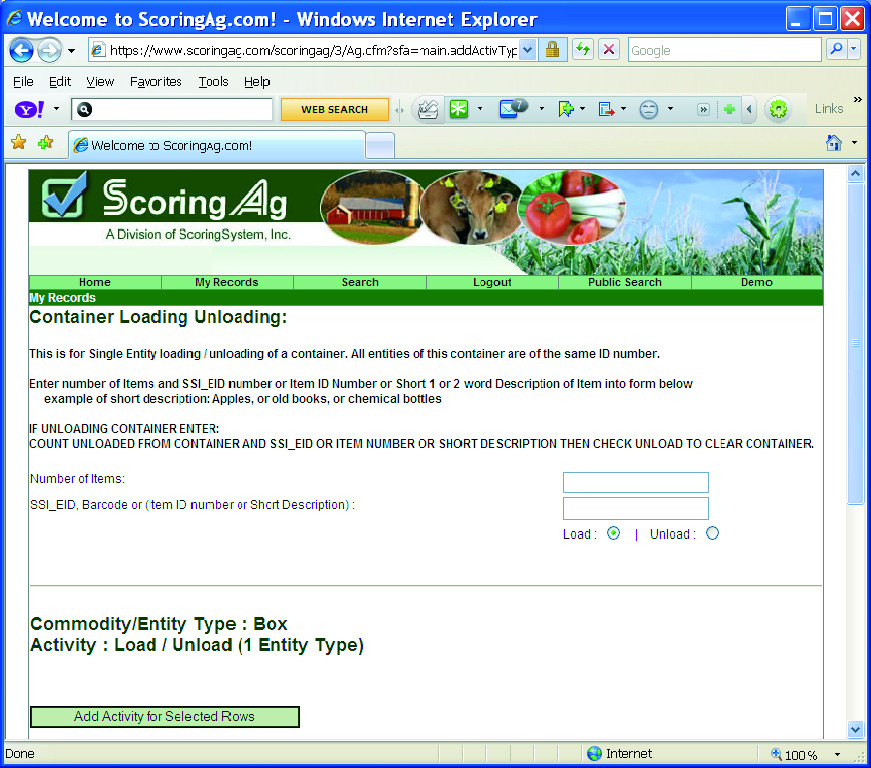
Food Tracking Made Easy With Food Traceability Software
Country of Origin Requirements in the United States: An Overview Country of origin labeling is mandatory for all consumer products imported and sold in the United States. Country of origin labeling is often as straightforward as printing a 'Made in [INSERT COUNTRY]' on the product and its packaging. That being said, there are exemptions for some products, and it's sometimes not that simple to determine ...
Post a Comment for "45 is country of origin required on food labels"